• Home
  • What To Keep In Mind When Choosing A Wholesale Construction Material Supplier In India?

What To Keep In Mind When Choosing A Wholesale Construction Material Supplier In India?

featured-image

Categories

What To Keep In Mind When Choosing A Wholesale Construction Material Supplier In India?

A building materials distributor should be more than just a vendor of supplies. They should be an active part of the process that provides the tools for success and fuels the growth of your business. A lousy supplier can sabotage even the best construction projects, and a great supplier can help save a challenging project from the brink of failure. As such, it is crucial to find reliable and trustworthy wholesale construction material suppliers in India who can get you what you need when you need it. 

When evaluating different distributors, begin by asking these questions: 

Does the Construction Materials Distributor Deliver on Time? 

This is the most essential trait a supplier should possess. Work at a job site can be halted when materials arrive late or fail to arrive. When checking references and reviews, keep a sharp eye out for any mention of late and failed deliveries and consider the context. 

If the order ran late, did the distributor offer a substitute product that worked just as well and could come simultaneously? Did they communicate the problem days or weeks in advance, or was it discovered on the same day? Supply chain interruptions and other problems are unavoidable sometimes. However, a good supplier will ensure their client’s project succeeds even when difficulties arise. 

Do They Promise Proper Order Fulfillment? 

Of course, every distributor will tell their customers they deliver on time. Whether they live up to that promise is another question, so examine its details before making a purchase. Does the supplier consistently deliver on their commitments? Do they offer substitutions and replacements when unavoidable problems arise? Can we stay in touch and keep updated on the status of our orders? 

Having tangible mechanisms in place to ensure your materials arrive when you expect them–and having real consequences like free replacements if they’re late–means that the supplier has the structure and incentive to back up the promise of on-time delivery. GMs and CMs depend on building materials distributors to keep a project running smoothly, so choose a company that can hold up its end of the deal. 

What is Their Reputation? 

Within every region, people in the construction industry talk. Without even trying, they create a tight-knit community. And like any community, they develop an intimate knowledge of the good, bad, and ugly players in their locale. Often, to rule out the wrong supplier, all you have to do is ask around. Inquiring with just one or two other commercial contractors about the timing, quality, and placement of deliveries can provide valuable insights into building materials distributors. Most established and trustworthy suppliers can provide a list of independent references and reviews upon request. Following up on that list is a matter of due diligence, so don’t skip it. 

Are They Experienced? 

For building materials distributors, age is more than just a number. Suppliers with decades of operating experience can claim they have navigated the challenging start-up phase of their business and continued to thrive through booms and busts in the industry. Experience counts significantly in construction. However, any con artist can print “Established 1952” on their advertising, so it’s worth confirming. How? Most states maintain a publicly accessible database that lists the dates of incorporation for every relevant legal entity. You can go online and verify whether a business was incorporated or founded when it claims to have been. 

How is Their Customer Service? 

There are few things more frustrating than unanswered questions. When you call a building materials distributor, their staff should be able to answer your questions clearly and competently. Check their website to see if they list the experience of their representatives (often as combined experience or individual profiles under “Our Team”). 

Another easy test is to call the company’s sales team and ask about a product you’re familiar with. Briefly quiz them, inquire about potential replacements, and consider the pros and cons. This will give you a general understanding of how informed they are. Not many suppliers can consistently pass this test, so if you find one that can, they are worth considering. 

Do They Have Good Relationships with Manufacturers? 

Construction material suppliers in India must maintain good relationships with the brands they work with because they can’t demand priority deliveries. Reliable suppliers tend to foster close business relationships with product reps, which translates to preferential treatment for you. That should be reflected in their lead times and fill rates as well. 

Which Brands do They Offer? 

A good building materials distributor should offer the regional, national, and international brands that their customers want. However, they should also be able to leverage good working relationships with those brands and secure preferential deliveries for you. 

READ POST
featured-image

Categories

Tubes & Pipes Suppliers in India: Choosing the Right Pipes for Your Construction Projects

India’s booming infrastructure and real estate sectors have fueled a massive demand for reliable piping solutions. Whether it’s residential buildings, commercial complexes, or industrial facilities, selecting the right pipes and tubes is crucial for ensuring safety, durability, and cost efficiency. With a wide array of materials and grades available, understanding the landscape of Tubes & Pipes suppliers in India can help you make the best decisions for your construction projects. 

Understanding the Types of Pipes and Tubes Used in Construction 

Construction projects require different types of pipes and tubes, depending on their application, such as water supply, drainage, HVAC systems, fire protection, or structural support. Here are the most commonly used categories: 

  • Steel Pipes: Renowned for their exceptional strength and durability, steel pipes are widely utilized in high-pressure applications and structural frameworks. 
  • Galvanized Iron (GI) Pipes: These are steel pipes coated with zinc to prevent rusting, ideal for water supply lines and outdoor installations. 
  • Non-Corrosive Metal Pipes: Copper and aluminum pipes fall into this category, offering excellent resistance to corrosion and are used in plumbing and HVAC systems. 
  • Plastic Pipes: Lightweight and cost-effective, plastic pipes, such as PVC and CPVC, are commonly used in residential plumbing and drainage systems. 
  • Polymer Pipes: Advanced polymers, such as PEX and HDPE, are gaining popularity due to their flexibility, chemical resistance, and long lifespan. 

Each type has its own advantages and limitations, making it essential to match the pipe type with the specific needs of your project. 

Materials and Grades to Explore 

The performance of a pipe is largely determined by the material composition and grade. Here’s a breakdown: 

  • Carbon Steel: Used in industrial and structural applications, carbon steel pipes offer very high tensile strength and are available in various grades, including ASTM A106 and API 5L. 
  • Stainless Steel: Ideal for corrosive environments, stainless steel pipes are available in grades such as SS304 and SS316, commonly used in chemical plants and food processing facilities. 
  • Copper: Highly durable and corrosion-resistant, copper pipes are preferred for hot and cold water systems. 
  • PVC/CPVC: These thermoplastics are easy to install and resistant to chemical corrosion, making them the most suitable for residential plumbing applications. 
  • HDPE/PEX: These flexible polymers are used in underground water supply and radiant heating systems. 

Choosing the right grade ensures longevity, safety, and compliance with industry standards. 

The Rise of the Indian Piping Industry 

India’s piping industry is experiencing robust growth, driven by urbanization, industrial expansion, and government initiatives like “Smart Cities” and “Housing for All.” According to recent market reports, the India Steel Pipes and Tubes Market was valued at almost USD 32.88 billion in 2023 and is projected to reach USD 37.69 billion by 2030, growing at a CAGR of 6.43%. 

Key drivers include: 

  • Infrastructure development: Roads, bridges, and metro projects require extensive piping networks. 
  • Oil & gas exploration: Demands high-grade steel pipes for transportation and drilling. 
  • Water and sewage systems: Increasing need for durable and corrosion-resistant pipes. 
  • Manufacturing and automotive sectors: Require precision tubes for machinery and vehicles. 

This growth has led to the rise of numerous Tubes & Pipes suppliers in India, offering competitive pricing and international-grade products. 

How to Choose the Right Supplier? 

When selecting a supplier, consider the following: 

  • Product Range: Ensure they offer the pipe types and grades you need. 
  • Certifications: Look for ISO, BIS, and other quality certifications. 
  • Delivery and Logistics: Timely delivery is crucial for project timelines. 
  • Technical Support: Suppliers should offer guidance on installation and maintenance. 
  • Pricing: Competitive pricing without compromising quality. 

A reputable supplier can significantly impact the success of your construction project. 

Final Thoughts 

Making the Smart Choice matters in every project! 

Choosing the right pipes and tubes is more than a technical decision; it’s a strategic investment in the longevity as well as safety of your infrastructure. With a thriving market and an extensive range of options, Tubes & Pipes suppliers in India are well-equipped to meet the emerging demands of modern construction. 

Whether you’re building a skyscraper or a suburban home, make sure your piping choices are backed by quality, durability, and expert support. 

Seeking high-quality pipes for your next project?  Visit zhuzoor.com, your trusted platform for discovering top tube and pipe suppliers in India, comparing products, and securing the best deals for your construction needs. 


READ POST
featured-image

Categories

Structural Steel Suppliers in India: Why Structural Steel is the Backbone of Modern Construction?

Modern construction has undergone dramatic evolution over the past century, with innovations in materials and techniques reshaping skylines worldwide. Among these advancements, structural steel stands out as the backbone of contemporary architecture and engineering. From towering skyscrapers and expansive bridges to industrial complexes and residential projects, structural steel provides the strength, flexibility, and sustainability that modern construction demands. This is why structural steel suppliers in India play such a critical role in fueling the nation’s infrastructure growth. 

What Makes Structural Steel Unique? 

Structural steel is a category of steel designed specifically for construction purposes. Unlike ordinary steel, it is engineered to withstand immense loads, resist environmental stress, and provide long lasting durability. Its unique properties make it indispensable in projects where safety, efficiency, and longevity are paramount. 

Key Characteristics Include: 

  • High strength to weight ratio: Structural steel offers exceptional strength without excessive weight, allowing architects to design taller and more complex structures. 
  • Versatility: It can be molded into different shapes and sizes, making it suitable for a wide range of applications. 
  • Durability: When treated properly, structural steel is resistant to corrosion and wear, ensuring a long service life. 
  • Recyclability: Steel is one of the most widely recycled materials in the world, aligning with sustainability goals. 

Structural Steel in Modern Construction 

The role of structural steel in construction is evident in some of the world’s most iconic projects. Skyscrapers like the Burj Khalifa, bridges such as the Golden Gate, and countless industrial plants rely on steel frameworks for stability and resilience. In India, rapid urbanization and infrastructure development have further amplified the demand for structural steel. 

Applications Include: 

  • High-rise buildings: Steel frames enable vertical expansion without compromising safety. 
  • Bridges and flyovers: Structural steel provides the tensile strength needed to span long distances. 
  • Industrial facilities: Factories, warehouses, and plants depend on steel for robust frameworks. 
  • Residential projects: Modern housing increasingly incorporates steel for durability and design flexibility. 

The Importance of Structural Steel Suppliers in India 

India’s booming construction industry relies heavily on reliable suppliers to meet its growing demand for structural steel. Structural Steel suppliers in India ensure that projects across the country have access to high quality materials that meet international standards. Their role is not limited to providing steel; they also contribute to innovation, sustainability, and cost-effective solutions. 

Benefits of Working with Trusted Suppliers: 

  • Quality assurance: Suppliers adhere to strict standards, ensuring safety and reliability. 
  • Timely delivery: Construction projects depend on punctual supply chains to avoid delays. 
  • Customization: Suppliers provide tailored solutions to meet specific project requirements. 
  • Sustainability practices: Many suppliers focus on ecofriendly production and recycling. 

Why Structural Steel is the Backbone of Modern Construction? 

Structural steel is considered the backbone of modern construction for several reasons: 

  • Strength and stability: It supports massive loads, making it ideal for largescale projects. 
  • Design flexibility: Architects can experiment with innovative designs thanks to steel’s adaptability. 
  • Speed of construction: Prefabricated steel components significantly reduce construction time. 
  • Cost efficiency: Long-term durability and reduced maintenance make steel a co-steffective choice. 
  • Safety: Steel structures are resistant to fire, earthquakes, and extreme weather conditions when properly engineered. 

Sustainability and the Future of Steel 

As the world moves toward sustainable development, structural steel aligns perfectly with ecofriendly goals. Its recyclability reduces waste, while modern production techniques minimize carbon footprints. In India, where infrastructure growth must balance environmental concerns, structural steel offers a responsible solution. 

Future Trends Include: 

  • Green steel production: Using renewable energy and low carbon processes. 
  • Smart integration: Combining steel frameworks with smart building technologies. 
  • Hybrid materials: Blending steel with composites for enhanced performance. 

Conclusion 

Structural steel has earned its reputation as the backbone of modern construction by delivering unmatched strength, versatility, and sustainability. With India’s rapid urbanization and infrastructure expansion, the role of Structural Steel suppliers in India becomes even more vital. They ensure that builders, architects, and engineers have access to the materials needed to create safe, innovative, and future ready structures. 

If you’re looking to partner with trusted suppliers who understand the demands of modern construction, visit zhuzoor.com today. Discover how their expertise and solutions can help you build stronger, smarter, and more sustainable projects. 

READ POST
featured-image

Categories

Zhuzoor: Your Trusted Building Material Supplier in India

In the ever-evolving construction industry, the foundation of every successful project lies in the quality of its materials. Whether you’re building a home, an office, or a large-scale infrastructure project, choosing the right supplier can make all the difference. Among the many building material suppliers in IndiaZhuzoor has emerged as a trusted name, offering reliability, variety, and quality that stand the test of time. 

Why Are Building Materials Important? 

  • Strength and durability: The longevity of any structure depends on the strength of its materials. High-quality cement, steel, bricks, and aggregates ensure that buildings withstand environmental stress and daily wear. 
  • Safety: Inferior materials can compromise safety, leading to structural failures. Reliable suppliers guarantee compliance with industry standards, protecting both workers and occupants. 
  • Aesthetic appeal: Beyond strength, materials like tiles, paints, and woodwork contribute to the beauty of a structure. Choosing the right supplier ensures access to products that enhance design. 
  • Cost efficiency: Durable materials reduce maintenance costs over time. Investing in quality upfront saves money in the long run. 

In short, building materials are not just components—they are the backbone of every construction project. 

How to Choose the Right Local Building Material Supplier Online? 

With the rise of e-commerce, finding building material suppliers in India online has become easier. However, not all suppliers are equal. Here are key factors to consider: 

  • Reputation and trustworthiness: Look for suppliers with proven track records. Customer reviews and testimonials can reveal reliability. 
  • Transparency in pricing: Hidden costs can derail budgets. A good supplier provides clear, upfront pricing. 
  • Product range: From cement and steel to finishing materials, a comprehensive catalog saves time and ensures consistency. 
  • Delivery efficiency: Timely delivery is crucial in construction. Delays in materials can stall entire projects. 
  • Customer support: Responsive service helps resolve queries quickly, ensuring smooth transactions. 
  • Digital convenience: A user-friendly website or app makes browsing, ordering, and tracking materials effortless. 

Zhuzoor excels in all these areas, making it a standout choice for contractors, builders, and homeowners alike. 

Explore Product Variety and Availability 

One of the biggest challenges in construction is sourcing diverse materials from multiple vendors. This often leads to logistical headaches and inconsistent quality. Zhuzoor addresses this by offering a wide variety of products under one roof: 

  • Core materials: Cement, steel, bricks, and aggregates for foundational strength. 
  • Finishing products: Tiles, paints, and woodwork for aesthetic appeal. 
  • Specialized items: Waterproofing solutions, adhesives, and eco-friendly materials for modern construction needs. 
  • Availability assuranceZhuzoor ensures that popular products are always in stock, reducing delays and keeping projects on schedule. 

By consolidating variety and availability, Zhuzoor simplifies procurement and guarantees consistency across projects. 

Zhuzoor’s Pledge to Provide Quality Materials for Long-lasting Structures

Zhuzoor’s mission goes beyond supplying materials—it’s about building trust and enabling long-lasting structures. Their pledge includes: 

  • Strict quality checks: Every product is vetted to meet industry standards. 
  • Partnerships with leading brands: Collaborations with top manufacturers ensure authenticity and reliability. 
  • Sustainability focusZhuzoor promotes eco-friendly materials, supporting green building practices. 
  • Customer-first approach: From small-scale buyers to large contractors, every client receives personalized attention. 
  • Continuous innovationZhuzoor adapts to market trends, ensuring customers access the latest materials and technologies. 

This commitment positions Zhuzoor as more than just a supplier—it’s a partner in building India’s future. 

Why Zhuzoor Stands Out Among Building Material Suppliers in India 

  • Nationwide reachZhuzoor caters to diverse regions, ensuring accessibility across India. 
  • Digital convenience: Their online platform makes ordering seamless, bridging the gap between traditional supply chains and modern digital solutions. 
  • Competitive pricing: By balancing affordability with quality, Zhuzoor ensures value for money. 
  • Reliability: Consistent delivery schedules and dependable service make them a trusted partner for builders. 

In a competitive market, these qualities distinguish Zhuzoor from other building material suppliers in India. 

Conclusion: Build with Confidence

Choosing the right building material supplier is one of the most critical decisions in construction. Quality materials ensure safety, durability, and beauty, while reliable suppliers simplify logistics and reduce stress. Zhuzoor embodies all these qualities, making it the go-to choice for builders, contractors, and homeowners across India. 

If you’re ready to elevate your construction projects with trusted materials, look no further. 

Explore Zhuzoor’s wide range of products and services today at Zhuzoor, your partner in building strong, sustainable, and beautiful structures. 

READ POST
featured-image

Categories

Construction Material Supply: The Backbone of Modern Infrastructure

In the world of infrastructure and real estate development, the phrase construction material supply is more than just a logistical concern—it’s the lifeblood of every successful project. Whether you’re building a residential complex, a commercial tower, or a national highway, the quality, availability, and efficiency of your material supply chain can significantly impact your timeline and budget.

This article examines the pivotal role of construction material supply, the challenges faced by contractors and developers, and how modern platforms like Zhuzoor are revolutionizing the industry.

What Is Construction Material Supply?

Construction material supply refers to the sourcing, transportation, and delivery of essential building materials to construction sites. These materials include:

  • Cement and concrete
  • TMT bars and structural steel
  • Bricks and blocks
  • Aggregates and sand
  • Pipes and fittings
  • Bitumen and construction chemicals
  • Scaffolding and shuttering materials

The supply chain encompasses manufacturers, distributors, logistics providers, and digital platforms that streamline procurement and ensure the timely delivery of goods and services.

Why Construction Material Supply Matters

Efficient construction material supply is vital for several reasons:

  1. Project Timelines

Delays in material delivery can halt construction, leading to missed deadlines and increased labor costs.

  1. Budget Control

Fluctuating prices and poor vendor management can lead to inflated costs. A reliable supply chain helps maintain budget discipline.

  1. Quality Assurance

Substandard materials compromise structural integrity. Trusted suppliers ensure compliance with safety and quality standards.

  1. Sustainability

Eco-friendly sourcing and optimized logistics reduce the environmental footprint of construction projects.

Also Read: Concrete vs. Cement: Knowing the Difference from Construction Material Suppliers

Challenges in Traditional Supply Chains

Despite its importance, construction material supply is riddled with challenges:

  • Fragmented vendor networks: Contractors often juggle multiple suppliers, leading to inefficiencies.
  • Price volatility: Market fluctuations make budgeting unpredictable.
  • Logistical bottlenecks: Poor coordination causes delays and material wastage.
  • Limited transparency: Tracking material movement is difficult without digital tools.
  • Credit constraints: Small contractors struggle with upfront payments and financing.

These issues have long plagued the industry until the rise of tech-enabled platforms.

The Rise of Digital Construction Marketplaces

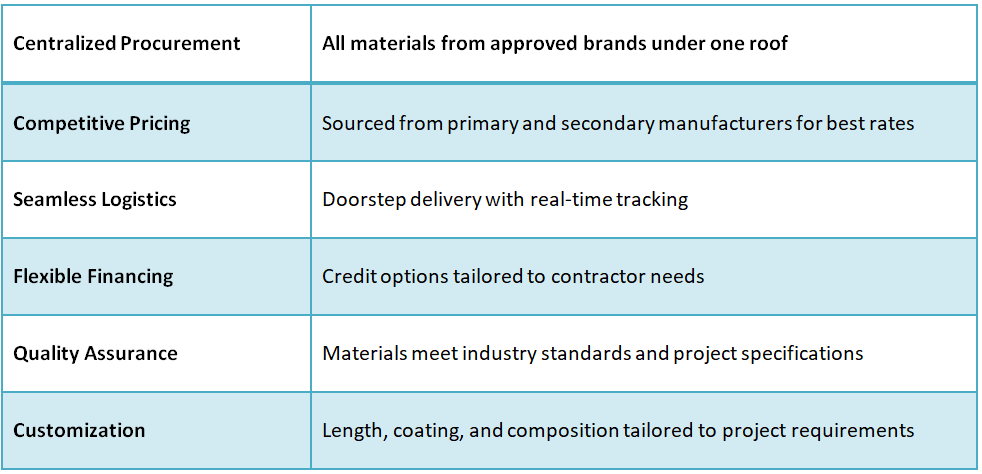
Modern platforms like Zhuzoor are revolutionizing construction material supply by offering:

  • Centralized procurement
  • Approved vendor networks
  • Competitive pricing
  • Real-time tracking
  • Flexible financing options

These platforms act as one-stop ecosystems, simplifying the entire supply chain for contractors, builders, and infrastructure developers.

Zhuzoor: A Game-Changer in Construction Material Supply

Zhuzoor, backed by Shyam Steel, is a new-age B2B marketplace that brings all construction materials and services under one roof. It caters to infrastructure contractors, builders, and developers across India.

What Zhuzoor Offers:

  • TMT Bars: Earthquake-resistant and available in all grades and diameters.
  • Structural Steel: Beams, channels, plates, and sheets customized to project needs.
  • Tubes & Pipes: DI, ERW, seamless, and hollow sections for diverse applications.
  • Construction Chemicals: Admixtures and binders for concrete and masonry.
  • Bitumen: Multiple grades for roads, runways, and hydraulic structures.
  • Crash Barriers: Safety solutions for highways and industrial zones.
  • Scaffolding & Shuttering: Props, spans, cuplocks, and haunch plates.

Logistics & Delivery

Zhuzoor ensures doorstep delivery through a robust network of transporters, eliminating delays and reducing material handling risks.

Financing & Credit

With conducive credit facilities, Zhuzoor eases working capital stress for customers, making procurement more accessible.

Tech-Enabled Transparency

Their platform offers real-time visibility into material movement, enhancing trust and accountability.

Benefits of Using Zhuzoor for Construction Material Supply

Benefits of Using Zhuzoor for Construction Material Supply

Also Read: The Importance of Certifications and Standards for Wholesale Building Material Suppliers

Real-World Impact: Faster, Smarter Construction

By streamlining construction material supply, platforms like Zhuzoor empower developers to:

  • Reduce project delays
  • Improve cost efficiency
  • Enhance structural quality
  • Scale operations across multiple sites
  • Focus on core construction activities instead of vendor management

Whether you’re building a metro line, a bridge, or a housing society, the right supply partner can transform your execution strategy.

The Future of Construction Material Supply

As India’s infrastructure boom continues, the demand for more efficient supply chains is expected to increase. Key trends include:

  • AI-powered inventory forecasting
  • Blockchain for material traceability
  • Green building materials
  • Integrated ERP systems
  • On-site 3D printing of components

Platforms like Zhuzoor are well-positioned to lead this transformation, combining legacy expertise with cutting-edge technology.

In conclusion: Build Smarter with Zhuzoor

Ready to simplify your construction material supply and boost project efficiency?

Partner with Zhuzoor—India’s trusted B2B marketplace for all your building needs.
From TMT bars to scaffolding, get top-quality materials at competitive prices, delivered right to your site.
Whether you’re a contractor, builder, or infrastructure developer, Zhuzoor has the tools, tech, and trust to power your next project.

Explore Zhuzoor now and revolutionize your construction supply chain.


READ POST
featured-image

Categories

Bulk Buying vs. Local Sourcing: What Works Best for Indian Builders?

India has a growing construction industry, but builders face critical decisions that affect the success of their projects. One such decision is choosing between bulk buying and local sourcing of construction materials. While both methods have their advantages, the right choice depends on several factors, including project size, budget, location, and timelines.

This article examines the advantages and disadvantages of each approach to help builders make informed decisions. Whether it is about constructing a residential complex or a commercial tower, working with reliable wholesale construction materials suppliers in India can make all the difference.

What is bulk buying?

Bulk buying includes purchasing large quantities of construction materials from centralised or national suppliers. This method is used for large-scale projects where consistency, cost-efficiency, and long-term planning are essential.

Advantages of bulk buying

  • Lower costs per unit: Bulk purchases often come with discounts, reducing overall material costs.
  • Uniform quality: Materials from the same batch ensure consistency in construction standards.
  • Streamlined procurement: Fewer transactions mean less time spent on sourcing and paperwork.
  • Priority service: Establishing long-term relationships with wholesale construction materials suppliers in India can lead to faster deliveries and enhanced support.

Disadvantages of bulk buying

  • Storage requirements: Builders need ample space to store large quantities of materials.
  • High upfront investment: Bulk buying requires a substantial initial outlay, which may not be feasible for smaller firms.
  • Logistical challenges: Transporting and handling large volumes can be complex and costly.
  • Risk of overstocking: Excess materials may go unused, leading to waste or financial loss.

wholesale construction materials suppliers

Read More: Concrete vs. Cement: Knowing the Difference from Construction Material Suppliers

What is local sourcing?

Local sourcing refers to the practice of purchasing construction materials from nearby vendors or suppliers. This method is preferred for smaller projects or when flexibility is needed.

Advantages of local sourcing

  • Quick access: Materials can be procured quickly, reducing delays.
  • Lower transport costs: Proximity to suppliers reduces delivery expenses.
  • Support for the local economy: Encourages the growth of regional businesses and fosters employment opportunities.
  • Adaptability: Easier to adjust orders based on changing project needs.

Disadvantages of local sourcing

  • Higher costs: Smaller orders may not qualify for bulk discounts.
  • Quality variability: Local suppliers may not always meet standardised quality benchmarks.
  • Limited inventory: Smaller vendors may not stock all required materials.
  • Frequent procurement: More time and effort are needed to manage multiple purchases.

Key factors to consider before choosing

Indian builders must weigh several factors before deciding between bulk buying and local sourcing:

  • Project scale: Large projects benefit more from bulk buying due to economies of scale.
  • Budget flexibility: Local sourcing may be more manageable for firms with limited capital.
  • Storage availability: Bulk buying requires secure and spacious storage facilities.
  • Supplier reliability: Trusted wholesale construction materials suppliers in India can ensure timely delivery and consistent quality.
  • Material type: Some materials, like sand or bricks, are better sourced locally due to freshness or fragility.

The hybrid approach: Combining both strategies

Many builders in India are now adopting a hybrid procurement strategy. This involves bulk purchasing essential materials, such as cement, steel, and TMT bars, from wholesale construction materials suppliers in India, while sourcing items like sand, bricks, and aggregates locally.

Benefits of a hybrid approach

  • Cost optimisation: Bulk discounts for core materials, while saving on transport for local items.
  • Flexibility: Ability to respond to changing project needs without overstocking.
  • Risk diversification: Reduces dependency on a single supplier or source.
  • Improved efficiency: Balances long-term planning with short-term adaptability.

Read More: Why Reliable Wholesale Construction Chemicals Suppliers in India Matter

Tips for Indian builders to optimise procurement

To make the most of your procurement strategy, consider the following tips:

  • Assess project needs thoroughly: Understand the volume and type of materials required before choosing a sourcing method.
  • Build strong supplier relationships: Partner with reliable wholesale construction materials suppliers in India for better service and pricing.
  • Use technology: Implement procurement software to track inventory, manage orders, and forecast needs.
  • Negotiate smartly: Don’t hesitate to ask for better rates, especially when buying in bulk.
  • Plan for storage: Ensure you have adequate space and security for storing bulk materials.
  • Monitor market trends: Stay informed about price fluctuations and availability to make informed, timely decisions.

Conclusion: Making the right choice

There’s no universal answer to whether bulk buying or local sourcing is better; it depends on the specific needs of each project. Bulk buying offers cost savings and consistency, while local sourcing provides flexibility and speed. For most Indian builders, a balanced approach that uses both strategies is often the most effective.

By working with trusted wholesale construction materials suppliers in India, builders can ensure quality, reliability, and efficiency in their procurement process. Whether you’re building in a metro city or a rural town, smart sourcing decisions will help you stay on budget and on schedule.

READ POST
featured-image

Categories

Tubes and Pipes Suppliers in India: Different Types of Pipes and Their Applications Explained

India is one of the leading countries in the production and supply of industrial tubes and pipes. With a wide variety of materials and grades available, tube and pipe suppliers in India serve industries such as construction, oil and gas, water treatment, and manufacturing. Choosing the right pipe is essential for ensuring safety, durability, and cost-efficiency in any project.

In this article, we’ll explore the most common types of pipes offered by tube and pipe suppliers in India, their features, and their typical applications. Let’s start with understanding the pipe grades.

Understanding pipe grades

Pipe grades refer to the classification of pipes based on their material composition, mechanical strength, and intended use. Each grade has specific properties that make it suitable for certain environments and applications.

Why pipe grades matter:

  • Ensure long-term performance under pressure
  • Provide resistance to corrosion and heat
  • Meet industry and safety standards
  • Help in selecting cost-effective solutions

Tubes and pipes suppliers in India offer a wide range of grades to meet both domestic and international requirements.

1. Carbon steel pipe

Carbon steel pipes are among the most commonly used types due to their strength and affordability. They are suitable for both structural and fluid transport applications.

Applications:

  • Oil and gas transmission
  • Water pipelines
  • Structural supports
  • Boiler tubes

Most tube and pipe suppliers in India maintain large inventories of carbon steel pipes due to the high demand for them.

2. Stainless steel pipe

Stainless steel pipes are renowned for their exceptional corrosion resistance and sleek finish. They are widely used in industries where hygiene and durability are critical.

Applications:

  • Food and beverage processing
  • Chemical plants
  • Marine structures
  • Pharmaceutical equipment

Many tube and pipe suppliers in India export stainless steel pipes to countries with strict quality standards due to their reliability and finish.

Different Types of Pipes and Their Applications

Also Read: How Climate Affects Material Choice: Building Material Suppliers in India

3. Alloy steel pipe

Alloy steel pipes are designed for high-performance applications. They contain elements like chromium, molybdenum, and nickel to enhance strength and heat resistance.

Applications:

  • Power generation
  • Petrochemical industries
  • High-pressure steam lines

Tubes and pipes suppliers in India often provide custom alloy steel solutions for demanding industrial environments.

4. Galvanised pipe

Galvanised pipes are coated with zinc to prevent rusting. They are suitable for outdoor and water-based applications where corrosion is a concern.

Applications:

  • Water distribution systems
  • Agricultural irrigation
  • Outdoor railings and fencing

Tubes and pipes suppliers in India offer galvanised pipes in various sizes and thicknesses, especially for infrastructure and rural development projects.

5. PVC and CPVC pipe

PVC and CPVC pipes are lightweight, easy to install, and resistant to corrosion. They are commonly used in residential and commercial plumbing systems.

Applications:

  • Residential plumbing
  • Drainage systems
  • Chemical handling

Although non-metallic, many tube and pipe suppliers in India also supply plastic piping solutions due to their growing demand in urban development.

Also Read: 5 Critical Features of the Best Building Material Suppliers in India

How to Select the Right Pipe and Pipe Grade?

Choosing the correct pipe and pipe grade depends on several factors:

  • Environment – Will the pipe be exposed to chemicals, moisture, or extreme temperatures?
  • Pressure and Temperature – What Are the Operating Conditions?
  • Budget – What is the cost vs. performance requirement?
  • Compliance – Does the grade meet local or international standards?

Consulting with experienced tubes and pipes suppliers in India can help you make the right choice based on your project’s needs.

Why Indian suppliers are trusted worldwide

India’s pipe manufacturing industry is known for:

  • High-quality production standards
  • Competitive pricing
  • Wide range of grades and materials
  • Strong export capabilities

Whether you are sourcing for domestic infrastructure or international projects, tube and pipe suppliers in India offer reliable solutions backed by certifications and global partnerships.

Conclusion

Understanding pipe grades is crucial for selecting the appropriate product for your specific application. From carbon steel to PVC, each grade has unique properties and uses. With a diverse range of offerings, tube and pipe suppliers in India are well-equipped to meet the demands of various industries.

By choosing the right supplier and grade, you ensure safety, efficiency, and long-term performance in your projects. For expert guidance and quality products, always rely on trusted tube and pipe suppliers in India.


READ POST
featured-image

Categories

Why Construction Material Wholesalers Recommend Fiber-Reinforced Cement

Today’s construction sector is undergoing a major transformation, with a preference for high-performance materials. Builders and developers are seeking solutions that offer durability, flexibility, and long-term value. One such innovation is fibre-reinforced cement (FRC), a composite material that combines traditional cement with various types of fibres to improve its structural properties.

Fibre-reinforced cement is gaining popularity among contractors and construction material wholesalers due to its ability to resist cracking, improve load distribution, and extend the lifespan of structures. Whether used in residential buildings, commercial complexes, or infrastructure projects, FRC is a game-changer in modern construction.

What is fiber-reinforced cement?

Fiber-reinforced cement is a modified version of standard cement that includes small, uniformly distributed fibres. These fibres can be made from a variety of materials, including steel, glass, synthetic polymers, and natural sources like coconut or jute. The purpose of adding fibres is to improve the mechanical properties of the cement, especially its tensile strength and resistance to cracking.

The fibres act as support within the cement matrix, helping to distribute stress more evenly and prevent cracks. This makes FRC useful in applications where durability and structural integrity are crucial.

fiber-reinforced-concrete

Types of fibres commonly used in FRC include:

  • Steel fibres: Ideal for industrial flooring and heavy-load areas due to their high strength.
  • Glass fibres: Lightweight and corrosion-resistant, suitable for decorative panels.
  • Synthetic fibres: These include polypropylene, which is cost-effective and flexible.
  • Natural fibres: Eco-friendly options like jute or coir are used in sustainable construction practices.

Construction material wholesalers are using these variations to meet the diverse needs of builders and contractors.

Key benefits of fiber-reinforced cement

Fibre-reinforced cement offers a wide range of benefits that make it suitable for modern construction projects.

1. Enhanced crack resistance

One of the most significant benefits of FRC is its ability to resist cracking. The fibres within the cement matrix help control shrinkage cracks that occur during curing. They also prevent micro-cracks from expanding, which improves the overall durability of the structure.

2. Increased structural durability

FRC is designed to withstand heavy loads and harsh environmental conditions. It performs well in high-traffic areas such as pavements, industrial floors, and parking lots. Its high durability reduces the chances of repeated repairs and maintenance, saving time and costs in the long run.

3. Better water resistance

Fiber-reinforced cement has lower permeability compared to traditional cement. This makes it more resistant to water infiltration, which is crucial for structures exposed to moisture, such as basements, water tanks, and buildings in coastal regions.

4. Better fire resistance

Certain fibres, especially mineral-based ones, can improve the fire resistance of cement. This helps maintain the structural integrity of buildings during fire incidents, providing an added layer of safety and security.

5. Versatility in applications

FRC can be used in a wide range of construction scenarios, including precast panels, roofing sheets, pavements, and load-bearing walls. Its adaptability makes it a valuable product for construction material wholesalers who cater to various segments of the industry.

Why construction material wholesalers promote FRC

With the increasing demand for advanced building materials, construction material wholesalers have a unique opportunity to lead the market by promoting fibre-reinforced cement. Here are a few reasons why wholesalers add FRC to their product lineup:

  • High demand: Builders are actively seeking materials that offer long-term performance.
  • Competitive advantage: Offering innovative products sets wholesalers apart from competitors.
  • Customer satisfaction: FRC delivers reliable results, ensuring repeat business.
  • Sustainability: Natural fibre options align with eco-friendly construction trends.

By educating customers about the benefits of FRC and providing technical support, wholesalers can build stronger relationships and increase sales.

Challenges and considerations

While fiber-reinforced cement offers many advantages, there are a few considerations to keep in mind:

  • Cost: FRC may be slightly more expensive than traditional cement, but the added durability often justifies the increased cost.
  • Mixing requirements: Proper blending is essential to ensure uniform fibre distribution and optimal performance.
  • Storage conditions: Fibers must be stored in dry environments to maintain their quality and effectiveness.

Construction material wholesalers should inform buyers of these aspects to ensure proper usage and customer satisfaction.

Conclusion

Fiber-reinforced cement is transforming the way buildings are constructed. Its superior strength, crack resistance, and versatility make it an ideal choice for modern projects. For construction material wholesalers, offering FRC is not just about expanding inventory; it’s about meeting the evolving needs of the construction industry.

contact us

READ POST
featured-image

Categories

Top Reasons to Choose Structural Steel Suppliers in India

Among the different categories of steel that are used for other purposes, the most popular type of steel is structural steel. This steel variety is mostly used in the construction projects. It is a carbon steel with approximately 2.1% carbon content. Due to this reason, this steel type consists of great strength and high ductility.

Common Structural Steel Shapes and Their Applications

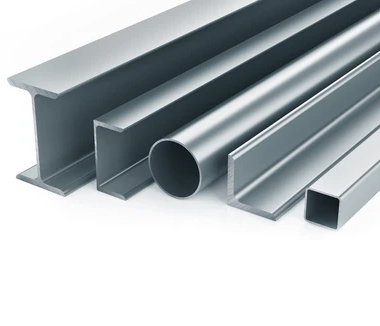
Furthermore, structural steel suppliers in India deal with various shapes of structural steel, including I-beams, Z-shapes, angles, tees, bars, and rods. Due to an improved iron and carbon compound mixed alloy, structural steel is the perfect choice for supporting plates and bolt joints. It possesses a crystalline structure that joins the framework with incredible strength and develops the ‘skeleton’ of the building.

Why is structural steel so important in construction?

Owing to its components and benefits, structural steel is very popular among steel dealers in India. Here are the topmost benefits of using structural steel in construction.

1. Strength:

Structural steel can be moulded into different structures. This makes it a highly suitable material for use in the construction process. Furthermore, it is derived from an array of constituents that include the chemical makeup, manufacturing process, and heat treatment. It is essential to purchase structural steel from the best steel companies due to the high iron content. The steel can be incredibly strong only with the addition of iron, followed by several elements like manganese and niobium.

2. Cost-effectiveness:

One of the most affordable ways of construction is to employ structural steel while also making buildings. Most steel dealers in India deal in this steel due to its low-cost base material. Thus, the amount required to produce just a single tonne of steel is significantly less.

3. Versatility:

Architects and designers find it very easier to use such structural steel due to its versatility and expressive capabilities. Currently, they have also begun to add an aesthetic touch to the structure. Steel can be shaped and also fashioned according to one’s own needs. Thus, the non-linear designs will greatly benefit from its use.

The flexibility of structural steel helps maximise space in a structure because it requires less room compared to other materials, such as concrete. The structure can also be modified according to the required circumstances. Additionally, the framed buildings can be upgraded, and facades and new architectural structures can be easily added.

4. Sustainability:

The energy consumption in building this metal has decreased over the past 30 years due to advancements in technology. The best steel companies in India are well aware that structural steel is one of the most sustainable materials. Even after recycling the steel, its superior quality remains unchanged, making it reusable and retaining its original durability. Besides, it is not vulnerable to pests like termites and mould.

5. Fire resistant:

Almost every steel supplier deals with structural steel due to its resistance to fire. However, the metal is likely to melt whenever heated at a surging temperature. The temperature at which structural steel can no longer hold the structure is called the ‘Critical Temperature’. This steel variety often undergoes a ‘fire rest’ process, where the metal gets heated to test its resistance.

6. Susceptible to different elements:

Structural teel suppliers in India have greatly benefited from structural steel due to its high resistance to various elements. For instance, wood is sensitive to the moulds that thrive in moist and porous environments. However, steel is not at all impacted by termites or other pests, and it does not have any chance of rotting.

zhuzoor

Key Factors to Consider When Looking for Structural Steel Suppliers

Choosing the right supplier for all your construction needs can be a daunting task. Here are some essential factors to keep in mind:

1. Quality of Steel Offered

The quality of structural steel is non-negotiable. Ensure that the supplier adheres to international standards and provides superior-quality structural steel for construction. Look for certifications like ISO, IS, and other relevant quality marks.

2. Experience and Reputation

A supplier’s experience in the industry speaks volumes about their credibility. Reputable companies have an already established and a proven track record of delivering excellence.

3. Range of Products

A good supplier should offer an extensive range of structural steel products like the beams, channels, angles, and plates, to cater to the diverse needs of the different construction projects.

4. Timely Delivery

Construction projects operate on tighter schedules. Delays in the construction material delivery can also lead to highly expensive setbacks. Opt for a contsruction material supplier renowned for its punctuality and efficient logistics.

5. Customer Support

Reliable suppliers offer an excellent customer service, guiding you throughout the complete selection process and addressing several concerns very promptly.

In conclusion

Choosing the right structural steel suppliers is a decision that can make or even break your entire construction project. Whether you’re starting out on a large-scale infrastructure project or a small residential build, investing in high-quality structural steel for construction is essential.

ZHuzoor provides various types of Structural Steel (Angle, Beam, Channel, Bars, Strips, Plates, and Sheets) used in infrastructure projects, building construction, and other applications. Get in touch today!

contact us

READ POST
featured-image

Categories

How Climate Affects Material Choice: Building Material Suppliers in India

India’s vast and varied geography has a wide range of climatic conditions. These regional differences play a crucial role in determining the materials used in construction. For builders, architects, and building material suppliers in India, understanding these climatic influences is essential for creating durable, energy-efficient, and sustainable structures.

India’s climatic zones and their impact on construction

India is divided into five major climatic zones, each with unique environmental challenges:

  • Hot and dry (e.g., Rajasthan, parts of Gujarat)
  • Warm and humid (e.g., Kerala, coastal Tamil Nadu)
  • Moderate (e.g., Bangalore, Pune)
  • Cold and Snow-bound (e.g., Himachal Pradesh, Ladakh)
  • Composite (e.g., Delhi, Lucknow, Bhopal)

Each zone requires specific construction strategies and material choices to ensure comfort, safety, and longevity.

Hot and dry regions: Building material suppliers in India prioritising heat resistance

In hot and dry areas, temperatures can exceed 45°C during summer. The key challenge here is to keep interiors cool and reduce energy consumption.

Recommended materials:

  • Adobe and mud bricks: These have high thermal mass and keep interiors cooler.
  • Lime plaster: Offers natural insulation and reflects heat.
  • Terracotta tiles: Used for roofing, they help in reducing heat absorption.
  • Reflective paints and coatings: Reduce heat gain on external surfaces.

Why it matters:

Building material suppliers in India operating in these regions focus on materials that offer thermal insulation and reduce the need for artificial cooling systems.

Warm and humid regions: Fighting moisture and mould

Coastal states like Kerala and West Bengal experience high humidity and heavy rainfall. In such climates, moisture control is critical to prevent mould, decay, and structural damage.

Recommended materials:

  • Fly ash bricks: These are breathable and help regulate moisture.
  • Concrete blocks with waterproofing additives: Prevent water seepage.
  • Anti-fungal paints: Protect walls from mould and mildew.
  • Treated wood and steel: Resist corrosion and termite attacks.

Building material suppliers in India in humid zones often recommend non-porous and water-resistant materials to ensure long-term durability.

Also Read: Concrete vs. Cement: Knowing the Difference from Construction Material Suppliers

Cold and snow-bound regions: Ensuring insulation and strength

Buildings in the northern Himalayan belt must withstand snow loads and freezing temperatures. Materials must provide insulation and structural integrity.

Recommended materials:

  • Timber: Naturally insulates and is widely available in hilly regions.
  • Stone masonry: Offers strength and thermal mass.
  • Double-glazed windows: Retain indoor heat and reduce energy loss.
  • Insulated roofing sheets: Prevent heat escape and snow accumulation.

Building material suppliers in India serving these regions offer materials that can endure extreme cold while maintaining indoor comfort.

Composite climate: Balancing extremes

Cities like Delhi and Lucknow experience both hot summers and cold winters. This duality requires versatile materials that can adapt to seasonal changes.

Recommended materials:

  • Autoclaved aerated concrete (AAC) blocks: Provide excellent insulation.
  • UPVC windows and doors: Offer thermal efficiency and sound insulation.
  • Cool roof coatings: Reflect sunlight during summer.
  • Insulated wall panels: Help retain heat during winter.

Building material suppliers in India that deal with composite climates often offer hybrid solutions that balance insulation, ventilation, and energy efficiency.

Moderate climate: Flexibility in material choice

Cities like Bangalore and Pune enjoy relatively stable weather, allowing more flexibility in choosing the material. Sustainability and cost-efficiency remain important.

Recommended materials:

  • Cement blocks and red bricks: Common and cost-effective.
  • Glass and steel: Used in modern architecture for aesthetics and strength.
  • Solar panels and green roofs: Popular for eco-conscious construction.

Even in moderate climates, building material suppliers in India use eco-friendly materials like recycled aggregates and low-VOC paints.

How building material suppliers in India adapt to regional needs

To meet the diverse demands of India’s climate zones, building material suppliers in India have adopted several strategies:

  • Customised inventories based on regional climate
  • Partnerships with local manufacturers for sustainable sourcing
  • Technical support and consultation for builders and architects
  • Training programs to educate clients on climate-smart materials

This adaptability ensures that construction projects are climate-resilient, cost-effective, and environmentally responsible.

Conclusion

Climate-responsive construction is no longer optional; it’s essential. With India’s diverse weather patterns, choosing the right materials can greatly impact a building’s performance, durability, and environmental footprint. Building material suppliers in India play a vital role in this ecosystem by offering region-specific solutions, promoting sustainable practices, and guiding builders toward smarter choices.

contact us

READ POST