
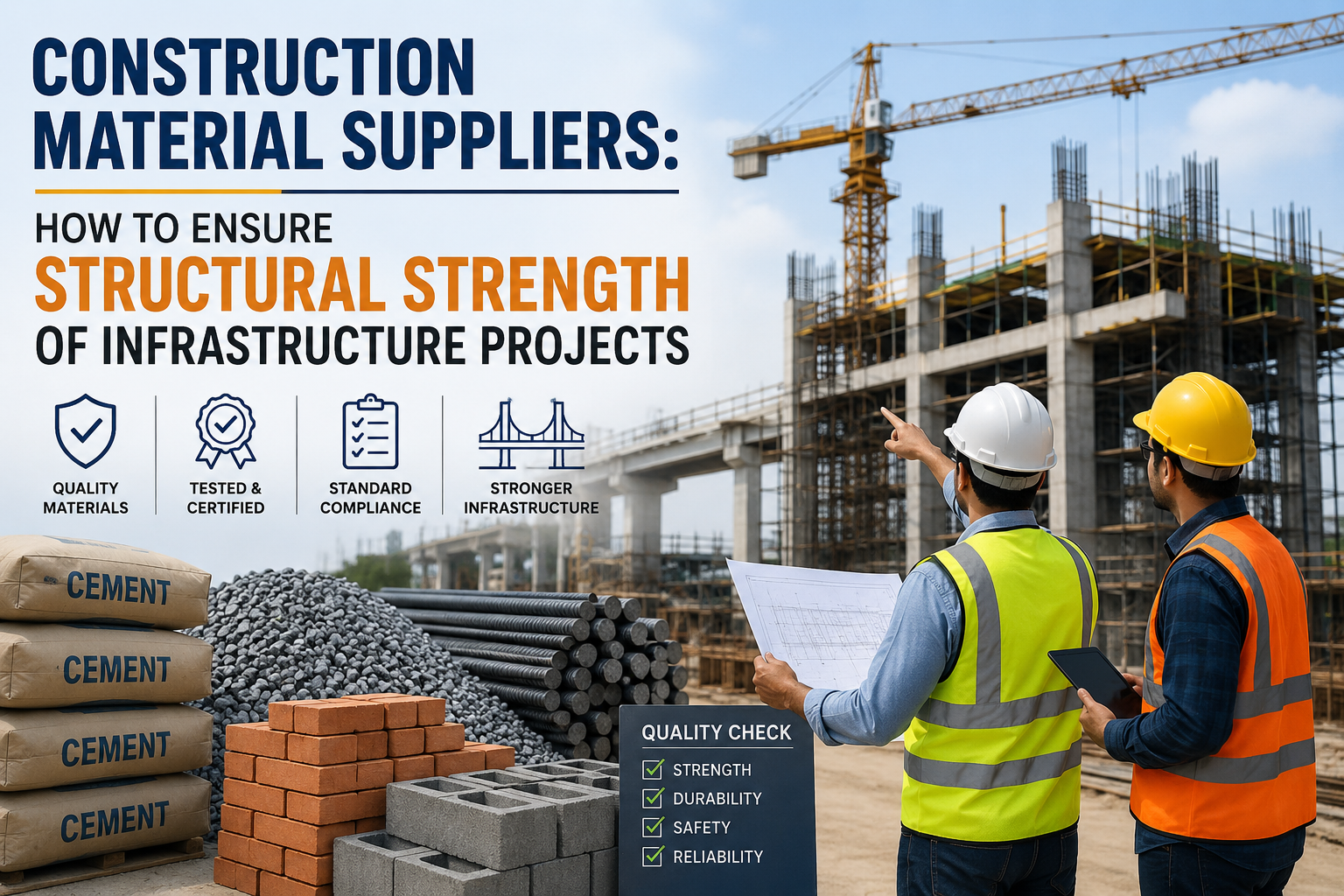
Infrastructure projects are the backbone of modern economies. From bridges and highways to residential complexes and industrial plants, these structures must withstand immense loads, environmental stresses, and decades of use. The secret to their durability lies in the materials chosen during construction. Selecting the right construction material suppliers is therefore not just a logistical decision; it is a strategic choice that directly impacts safety, compliance, and long‑term performance.
Platforms like Zhuzoor simplify this process by connecting contractors and developers with trusted suppliers, ensuring that every project is built on a foundation of quality and reliability.
Why Structural Strength Matters
Structural strength refers to a building or infrastructure’s ability to resist loads, stresses, and environmental conditions without failure. Weak materials compromise this strength, leading to:
- Safety risks such as cracks, collapses, or accidents.
- Higher maintenance costs due to frequent repairs.
- Regulatory non‑compliance when projects fail to meet safety codes.
- Reputational damage for contractors and developers.
Ensuring structural strength is therefore both a technical and ethical responsibility.
Role of Construction Material Suppliers
Reliable construction material suppliers play a pivotal role in guaranteeing structural strength. Their responsibilities include:
- Quality assurance: Supplying certified, tested materials that meet industry standards.
- Timely delivery: Preventing project delays by ensuring materials arrive on schedule.
- Cost efficiency: Offering competitive pricing without ever compromising quality.
- Technical support: Advising on material selection for specific structural needs.
Authenticity Matters More Than Discounts
In the construction industry, it’s tempting to chase the lowest price when sourcing materials. However, when it comes to infrastructure projects, authenticity matters more than discounts. The structural strength of a bridge, road, or building depends on the integrity of the materials used. A discounted batch of substandard cement or steel may save money upfront, but it can compromise safety, durability, and compliance in the long run.
Trusted construction material suppliers prioritize authenticity by offering certified products that meet both national and international standards. They provide transparent documentation, quality testing reports, and consistent supply chains. This authenticity ensures that every component from concrete mixes to reinforcement bars contributes to the project’s long‑term resilience.
Discounts may look attractive on paper, but authentic materials deliver far greater value by:
- Ensuring compliance with building codes alongside safety regulations.
- Reducing risks of structural failure and costly repairs.
- Building trust among stakeholders, investors, and end‑users.
- Enhancing reputation for contractors and developers.
Ultimately, authenticity safeguards not just the project, but also the lives of those who will use the infrastructure for decades to come.
Key Materials That Define Structural Strength
- Concrete : Concrete is the most widely used construction material. Its compressive strength determines the load‑bearing capacity of structures. Suppliers must provide consistent mix ratios, proper curing, and certified testing.
- Steel : Steel reinforcement bars (rebar) and structural steel provide tensile strength. High‑grade steel ensures flexibility and resistance to stress, especially in earthquake‑prone regions.
- Cement : Cement quality directly affects concrete strength. Suppliers must guarantee fresh, moisture‑free cement that meets IS or ASTM standards.
- Aggregates: Sand, gravel, and crushed stone provide bulk and stability to concrete. Clean, graded aggregates prevent voids and enhance durability.
- Bricks and Blocks : High‑density bricks and blocks ensure wall strength and insulation. Poor‑quality bricks can weaken the overall structure.
How to Ensure Structural Strength Through Suppliers
- Verify certifications: Ensure suppliers provide materials tested and certified by recognized authorities.
- Conduct quality checks: Perform lab tests on samples before bulk procurement.
- Prioritize sustainability: Choose eco‑friendly materials like recycled aggregates or low‑carbon cement.
- Ensure consistency: Work with suppliers who maintain uniform quality across batches.
- Leverage technology: Use platforms like Zhuzoor to track deliveries, verify suppliers, and streamline procurement.
Benefits of Partnering with Trusted Construction Material Suppliers
- Enhanced safety: Stronger materials reduce risks of accidents.
- Long‑term durability: Quality materials extend the lifespan of infrastructure.
- Cost savings: Fewer repairs and replacements lower overall project costs.
- Regulatory compliance: Certified materials ensure adherence to building codes.
- Reputation building: Delivering strong, durable projects enhances credibility.
Case Example: A Bridge Project Built on Quality
Consider a regional government commissioning a new bridge. The project required high‑strength concrete and corrosion‑resistant steel. By partnering with trusted construction material suppliers through Zhuzoor, the contractors ensured:
- Concrete mixes met compressive strength standards.
- Steel reinforcement bars were certified for tensile strength.
- Aggregates were clean and properly graded.
- Materials were delivered on time, preventing costly delays.
The result was a bridge that not only passed safety inspections but also promised decades of durability.
Conclusion
Structural strength is the cornerstone of successful infrastructure projects. By partnering with reliable construction material suppliers, businesses can ensure safety, compliance, and long‑term durability. Platforms like Zhuzoor make this process easier by connecting contractors and developers with trusted suppliers who deliver quality materials on time.
Schedule a DEMO with Zhuzoor today and discover how partnering with the right construction material suppliers can strengthen your next infrastructure project.
FAQs
- What role do construction material suppliers play in project success?
They provide certified, tested materials that ensure structural strength and compliance.
- How can I verify supplier quality?
Check certifications, conduct lab tests, and review past project references.
- Which materials are most critical for structural strength?
Concrete, steel, cement, aggregates, and bricks are the key materials.
- Can suppliers help with sustainability?
Yes, many suppliers offer eco‑friendly options like recycled aggregates and low‑carbon cement.
- Why use Zhuzoor for supplier connections?
Zhuzoor connects businesses with trusted suppliers, ensuring quality, compliance, and timely delivery.